|
|

|
Source: Bosworth/Toller, page d0548, entry 16 View original page image as: [TIFF] [PNG] [View previous entry] [View next entry] |
[Comment on this entry] [View comments] |
The following entry has been hand-corrected once. |
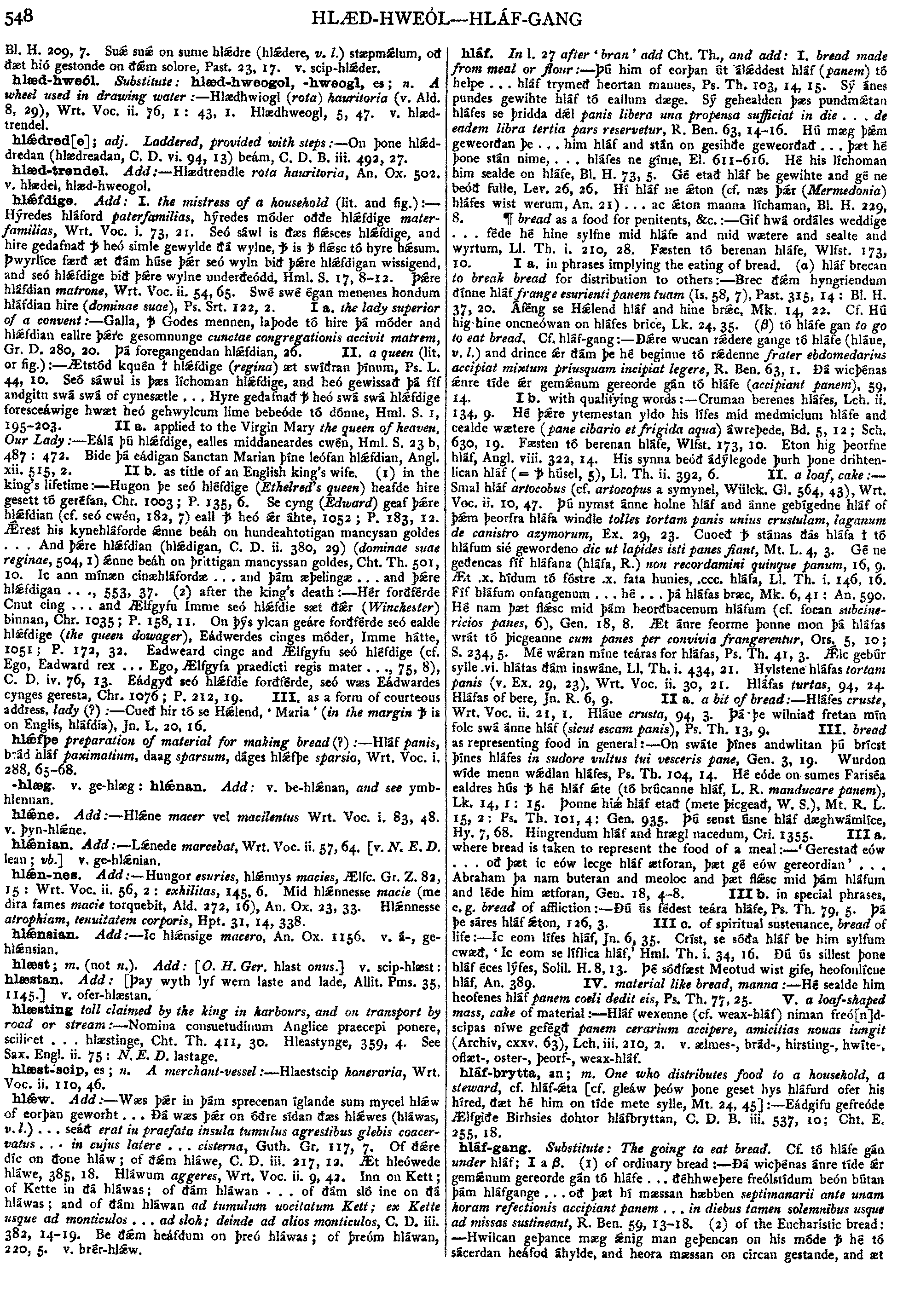
hláf.
In
l.
27
after
'bran'
add
Cht.
Th.,
and
add:
I.
bread
made
from
meal
or
flour
:--
Þú
him
of
eorþan
út
ál ddest
hláf
(panem)
tó
helpe
...
hláf
trymeð
heortan
mannes,
Ps.
Th.
103,
14,
15.
Sý
ánes
pundes
gewihte
hláf
tó
eallum
dæge.
Sý
gehealden
þæs
pundmtan
hláfes
se
þridda
dl
panis
libera
una
propensa
sufficiat
in
die
...
de
eadem
libra
tertia
pars
reservetur,
R.
Ben.
63,
14-16.
Hú
mæg
þm
geweorðan
þe
...
him
hláf
and
stán
on
gesihðe
geweorðað
...
þæt
hé
þone
stán
nime,
...
hláfes
ne
gíme,
El.
611-616.
Hé
his
líchoman
him
sealde
on
hláfe,
Bl.
H.
73,
5.
Gé
etað
hláf
be
gewihte
and
gé
ne
beóð
fulle.
Lev.
26,
26.
Hí
hláf
ne
ton
(cf.
næs
þr
(Mermedonia)
hláfes
wist
werum,
An.
21)
...
ac
ton
manna
líchaman,
Bl.
H.
229,
8.

bread
as
a
food
for
penitents,
&c.
:--
Gif
hwá
ordáles
weddige
...
féde
hé
hine
sylfne
mid
hláfe
and
mid
wætere
and
sealte
and
wyrtum.
Ll.
Th.
i.
210,
28.
Fæsten
tó
berenan
hláfe,
Wlfst.
173,
10.
I
a.
in
phrases
implying
the
eating
of
bread,
(
ddest
hláf
(panem)
tó
helpe
...
hláf
trymeð
heortan
mannes,
Ps.
Th.
103,
14,
15.
Sý
ánes
pundes
gewihte
hláf
tó
eallum
dæge.
Sý
gehealden
þæs
pundmtan
hláfes
se
þridda
dl
panis
libera
una
propensa
sufficiat
in
die
...
de
eadem
libra
tertia
pars
reservetur,
R.
Ben.
63,
14-16.
Hú
mæg
þm
geweorðan
þe
...
him
hláf
and
stán
on
gesihðe
geweorðað
...
þæt
hé
þone
stán
nime,
...
hláfes
ne
gíme,
El.
611-616.
Hé
his
líchoman
him
sealde
on
hláfe,
Bl.
H.
73,
5.
Gé
etað
hláf
be
gewihte
and
gé
ne
beóð
fulle.
Lev.
26,
26.
Hí
hláf
ne
ton
(cf.
næs
þr
(Mermedonia)
hláfes
wist
werum,
An.
21)
...
ac
ton
manna
líchaman,
Bl.
H.
229,
8.

bread
as
a
food
for
penitents,
&c.
:--
Gif
hwá
ordáles
weddige
...
féde
hé
hine
sylfne
mid
hláfe
and
mid
wætere
and
sealte
and
wyrtum.
Ll.
Th.
i.
210,
28.
Fæsten
tó
berenan
hláfe,
Wlfst.
173,
10.
I
a.
in
phrases
implying
the
eating
of
bread,
( )
hláfbrecan
to
break
bread
for
distribution
to
others
:--
Brec
ðm
hyngriendum
ðínne
hláf
frange
esurienti
panem
tuam
(Is.
58,
7),
Past.
315,
14:
Bl.
H.
37,
20.
Áféng
se
Hlend
hláf
and
hine
brc,
Mk.
14,
22.
Cf.
Hú
hig
hine
oncneówan
on
hláfes
brice,
Lk.
24,
35.
(
)
hláfbrecan
to
break
bread
for
distribution
to
others
:--
Brec
ðm
hyngriendum
ðínne
hláf
frange
esurienti
panem
tuam
(Is.
58,
7),
Past.
315,
14:
Bl.
H.
37,
20.
Áféng
se
Hlend
hláf
and
hine
brc,
Mk.
14,
22.
Cf.
Hú
hig
hine
oncneówan
on
hláfes
brice,
Lk.
24,
35.
( )
tó
hláfe
gan
to
go
to
eat
bread.
Cf.
hláf-gang
:--
Ðre
wucan
rdere
gange
tó
hláfe
(hláue,
v.l.)
and
drince
r
ðám
þe
hé
beginne
tó
rdenne
frater
ebdomedarius
accipiat
mixtum
priusquam
incipiat
legere,
R.
Ben.
63,
1.
Ðá
wicþénas
nre
tíde
r
gemnum
gereorde
gán
tó
hláfe
(accipiant
panem),
59,
14.
I
b.
with
qualifying
words
:--
Cruman
berenes
hláfes,
Lch.
ii.
134,
9.
Hé
þre
ytemestan
yldo
his
lífes
mid
medmiclum
hláfe
and
cealde
wætere
(pane
cibario
et
frigida
aqua)
áwreþede,
Bd.
5,
12;
Sch.
630,
19.
Fæsten
tó
berenan
hláfe,
Wlfst.
173,
10.
Eton
hig
þeorfne
hláf,
Angl.
viii.
322,
14.
His
synna
beóð
ádýlegode
þurh
þone
drihtenlican
hláf
(=
)
tó
hláfe
gan
to
go
to
eat
bread.
Cf.
hláf-gang
:--
Ðre
wucan
rdere
gange
tó
hláfe
(hláue,
v.l.)
and
drince
r
ðám
þe
hé
beginne
tó
rdenne
frater
ebdomedarius
accipiat
mixtum
priusquam
incipiat
legere,
R.
Ben.
63,
1.
Ðá
wicþénas
nre
tíde
r
gemnum
gereorde
gán
tó
hláfe
(accipiant
panem),
59,
14.
I
b.
with
qualifying
words
:--
Cruman
berenes
hláfes,
Lch.
ii.
134,
9.
Hé
þre
ytemestan
yldo
his
lífes
mid
medmiclum
hláfe
and
cealde
wætere
(pane
cibario
et
frigida
aqua)
áwreþede,
Bd.
5,
12;
Sch.
630,
19.
Fæsten
tó
berenan
hláfe,
Wlfst.
173,
10.
Eton
hig
þeorfne
hláf,
Angl.
viii.
322,
14.
His
synna
beóð
ádýlegode
þurh
þone
drihtenlican
hláf
(=
 húsel,
5),
Ll.
Th.
ii.
392,
6.
II.
a
loaf,
cake
:--
Smal
hláf
artocobus
(cf.
artocopus
a
symynel,
Wülck.
Gl.
564,
43),
Wrt.
Voc.
ii.
10,
47.
Þú
nymst
ánne
holne
hláf
and
ánne
gebígedne
hláf
of
þm
þeorfra
hláfa
windle
tolles
tortam
panis
unius
crustulam,
laganum
de
canistro
azymorum,
Ex.
29,
23.
Cuoeð
stánas
ðás
hláfa
tó
hláfum
sié
gewordeno
dic
ut
lapides
isti
panes
fiant,
Mt.
L.
4,
3.
Gé
ne
geðencas
fíf
hláfana
(hláfa,
R.)
non
recordamini
quinque
panum,
16,
9.
Æt
.x.
hídum
tó
fóstre
.x.
fata
hunies,
.ccc.
hláfa,
Ll.
Th.
i.
146,
16.
Fíf
hláfum
onfangenum
...
hé
...
þá
hláfas
bræc,
Mk.
6,
41:
An.
590.
Hé
nam
þæt
flsc
mid
þám
heorðbacenum
hláfum
(cf.
focan
subcinericios
panes,
6),
Gen.
18,
8.
Æt
ánre
feorme
þonne
mon
þá
hláfas
wrát
tó
þicgeanne
cum
panes
per
convivia
frangerentur,
Oto
5,
10;
S.
234,
5.
Méwran
míne
teáras
for
hláfas,
Ps.
Th.
41,
3.
Æ-acute;;lc
gebúr
sylle
.vi.
hláfas
ðám
inswáne,
Ll.
Th.
i.
434,
21.
Hylstene
hláfas
tortam
panis
(v.
Ex.
29,
23),
Wrt.
Voc.
ii.
30,
21.
Hláfas
turtas,
94,
24.
Hláfas
of
bere,
Jn.
R.
6,
9.
II
a.
a
bit
of
bread
:--
Hláfes
cruste,
Wrt.
Voc.
ii.
21,
1.
Hláue
crusta,
94,
3.
Þá
þe
wilniað
fretan
mín
folc
swá
ánne
hláf
(sicut
escam
panis),
Ps.
Th.
13,
9.
III.
bread
as
representing
food
in
general
:--
On
swáte
þínes
andwlitan
þú
brícst
þínes
hláfes
in
sudore
vultus
tui
vesceris
pane,
Gen.
3,
19.
Wurdon
wíde
menn
wdlan
hláfes,
Ps.
Th.
104,
14.
Hé
eóde
on
sumes
Fariséa
ealdres
hús
hé
hláf
te
(tó
brúcanne
hláf,
L.
R.
manducare
panem),
Lk.
14,
1:
15.
Þonne
hi
hláf
etað
(mete
þicgeað,
W.S.),
Mt.
R.
L.
15,
2:
Ps.
Th.
101,
4:
Gen.
935.
Þú
senst
úsne
hláf
dæghwámlíce,
Hy.
7,
68.
Hingrendum
hláf
and
hrægl
nacedum,
Cri.
1355.
III
a.
where
bread
is
taken
to
represent
the
food
of
a
meal
:--
'Gerestað
eów
...
oð
þæt
ic
eów
lecge
hláf
ætforan,
þæt
gé
eów
gereordian'
...
Abraham
þa
nam
buteran
and
meoloc
and
þæt
flsc
mid
þám
hláfum
and
léde
him
ætforan,
Gen.
18,
4-8.
III
b.
in
special
phrases,
e.g.
bread
of
affliction
:--
Ðú
ús
fédest
teára
hláfe,
Ps.
Th.
79,
5.
Þá
þe
sáres
hláf
ton,
126,
3.
III
c.
of
spiritual
sustenance,
bread
of
life
:--
Ic
eom
lífes
hláf,
Jn.
6,
35.
Críst,
se
sóða
hláf
be
him
sylfum
cwæð,
'Ic
eom
se
líflica
hláf,'
Hml.
Th.
i.
34,
16.
Ðú
ús
sillest
þone
hláf
éces
lýfes,
Solil.
H.
8,
13.
Þé
sóðfæst
Meotud
wist
gife,
heofonlícne
hláf,
An.
389.
IV.
material
like
bread,
manna
:--
Hé
sealde
him
heofenes
hláf
panem
coeli
dedit
eis,
Ps.
Th.
77,
25.
V.
a
loaf-shaped
mass,
cake
of
material
:--
Hláf
wexenne
(cf.
weax-hláf)
niman
freó[n]dscipas
níwe
gefégð
panem
cerarium
accipere,
amicitias
nouas
iungit
(Archiv,
cxxv.
63),
Lch.
iii.
210,
2.
v.
ælmes-,
brád-,
hirsting-,
hwíte-,
oflæt-,
oster-,
þeorf-,
weax-hláf.
húsel,
5),
Ll.
Th.
ii.
392,
6.
II.
a
loaf,
cake
:--
Smal
hláf
artocobus
(cf.
artocopus
a
symynel,
Wülck.
Gl.
564,
43),
Wrt.
Voc.
ii.
10,
47.
Þú
nymst
ánne
holne
hláf
and
ánne
gebígedne
hláf
of
þm
þeorfra
hláfa
windle
tolles
tortam
panis
unius
crustulam,
laganum
de
canistro
azymorum,
Ex.
29,
23.
Cuoeð
stánas
ðás
hláfa
tó
hláfum
sié
gewordeno
dic
ut
lapides
isti
panes
fiant,
Mt.
L.
4,
3.
Gé
ne
geðencas
fíf
hláfana
(hláfa,
R.)
non
recordamini
quinque
panum,
16,
9.
Æt
.x.
hídum
tó
fóstre
.x.
fata
hunies,
.ccc.
hláfa,
Ll.
Th.
i.
146,
16.
Fíf
hláfum
onfangenum
...
hé
...
þá
hláfas
bræc,
Mk.
6,
41:
An.
590.
Hé
nam
þæt
flsc
mid
þám
heorðbacenum
hláfum
(cf.
focan
subcinericios
panes,
6),
Gen.
18,
8.
Æt
ánre
feorme
þonne
mon
þá
hláfas
wrát
tó
þicgeanne
cum
panes
per
convivia
frangerentur,
Oto
5,
10;
S.
234,
5.
Méwran
míne
teáras
for
hláfas,
Ps.
Th.
41,
3.
Æ-acute;;lc
gebúr
sylle
.vi.
hláfas
ðám
inswáne,
Ll.
Th.
i.
434,
21.
Hylstene
hláfas
tortam
panis
(v.
Ex.
29,
23),
Wrt.
Voc.
ii.
30,
21.
Hláfas
turtas,
94,
24.
Hláfas
of
bere,
Jn.
R.
6,
9.
II
a.
a
bit
of
bread
:--
Hláfes
cruste,
Wrt.
Voc.
ii.
21,
1.
Hláue
crusta,
94,
3.
Þá
þe
wilniað
fretan
mín
folc
swá
ánne
hláf
(sicut
escam
panis),
Ps.
Th.
13,
9.
III.
bread
as
representing
food
in
general
:--
On
swáte
þínes
andwlitan
þú
brícst
þínes
hláfes
in
sudore
vultus
tui
vesceris
pane,
Gen.
3,
19.
Wurdon
wíde
menn
wdlan
hláfes,
Ps.
Th.
104,
14.
Hé
eóde
on
sumes
Fariséa
ealdres
hús
hé
hláf
te
(tó
brúcanne
hláf,
L.
R.
manducare
panem),
Lk.
14,
1:
15.
Þonne
hi
hláf
etað
(mete
þicgeað,
W.S.),
Mt.
R.
L.
15,
2:
Ps.
Th.
101,
4:
Gen.
935.
Þú
senst
úsne
hláf
dæghwámlíce,
Hy.
7,
68.
Hingrendum
hláf
and
hrægl
nacedum,
Cri.
1355.
III
a.
where
bread
is
taken
to
represent
the
food
of
a
meal
:--
'Gerestað
eów
...
oð
þæt
ic
eów
lecge
hláf
ætforan,
þæt
gé
eów
gereordian'
...
Abraham
þa
nam
buteran
and
meoloc
and
þæt
flsc
mid
þám
hláfum
and
léde
him
ætforan,
Gen.
18,
4-8.
III
b.
in
special
phrases,
e.g.
bread
of
affliction
:--
Ðú
ús
fédest
teára
hláfe,
Ps.
Th.
79,
5.
Þá
þe
sáres
hláf
ton,
126,
3.
III
c.
of
spiritual
sustenance,
bread
of
life
:--
Ic
eom
lífes
hláf,
Jn.
6,
35.
Críst,
se
sóða
hláf
be
him
sylfum
cwæð,
'Ic
eom
se
líflica
hláf,'
Hml.
Th.
i.
34,
16.
Ðú
ús
sillest
þone
hláf
éces
lýfes,
Solil.
H.
8,
13.
Þé
sóðfæst
Meotud
wist
gife,
heofonlícne
hláf,
An.
389.
IV.
material
like
bread,
manna
:--
Hé
sealde
him
heofenes
hláf
panem
coeli
dedit
eis,
Ps.
Th.
77,
25.
V.
a
loaf-shaped
mass,
cake
of
material
:--
Hláf
wexenne
(cf.
weax-hláf)
niman
freó[n]dscipas
níwe
gefégð
panem
cerarium
accipere,
amicitias
nouas
iungit
(Archiv,
cxxv.
63),
Lch.
iii.
210,
2.
v.
ælmes-,
brád-,
hirsting-,
hwíte-,
oflæt-,
oster-,
þeorf-,
weax-hláf.
|
Source: Bosworth/Toller, page d0748, entry 56 View original page image as: [TIFF] [PNG] [View previous entry] [View next entry] |
[Comment on this entry] [View comments] |
The following entry has been hand-corrected once. |
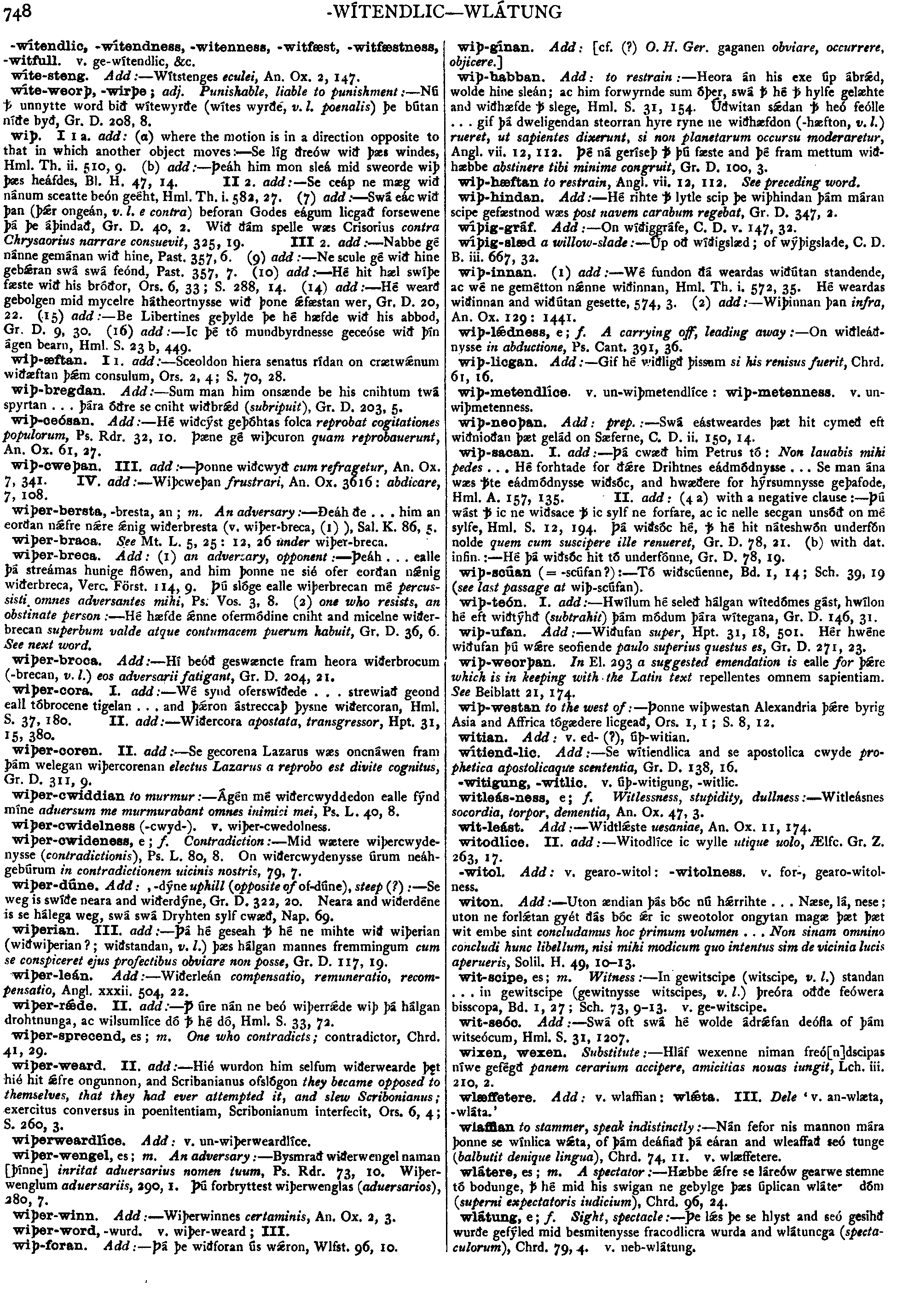
wixen, wexen. Substitute :-- Hláf wexenne niman freó[n]dscipas níwe gefégð panem cerarium accipere, amicitias nouas iungit, Lch. iii. 210, 2.
Germanic Lexicon Project (main page)
This search system was written by
Sean Crist
Please consider
volunteering
to correct the data in these online dictionaries.
No rights reserved. Feel free to use these data in any way you please.