|
|

|
Source: Bosworth/Toller, page b0072, entry 7 View original page image as: [TIFF] [PNG] [View previous entry] [View next entry] |
[Comment on this entry] [View comments] |
The following entry has been hand-corrected once. |
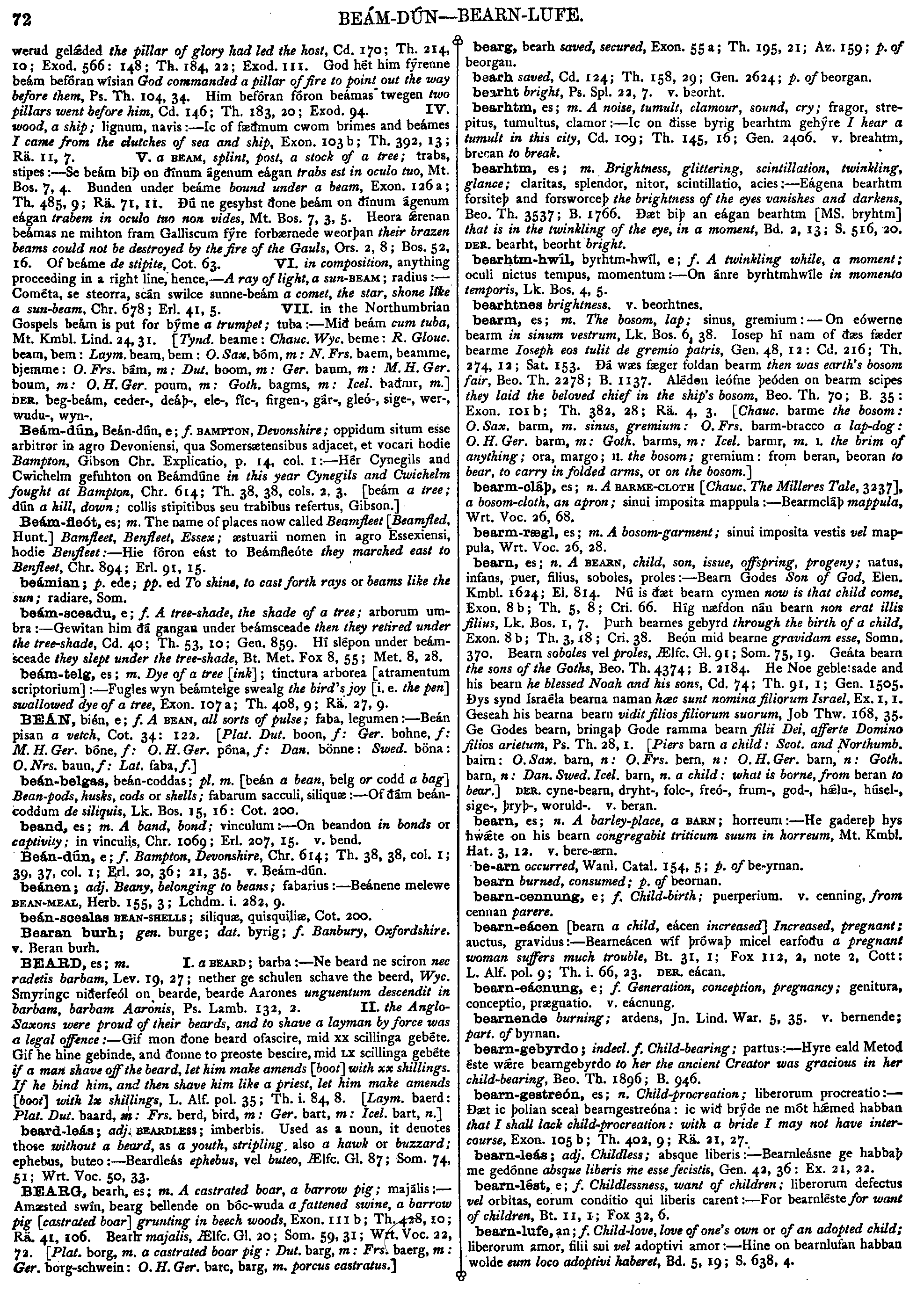
beán-belgas, beán-coddas; pl. m. [beán a bean, belg or codd a bag] Bean-pods, husks, cods or shells; fabarum sacculi, siliquæ :-- Of ðám beáncoddum de siliquis, Lk. Bos. 15, 56: Cot. 200.
|
Source: Bosworth/Toller, page b0164, entry 18 View original page image as: [TIFF] [PNG] [View previous entry] [View next entry] |
[Comment on this entry] [View comments] |
The following entry has been hand-corrected once. |
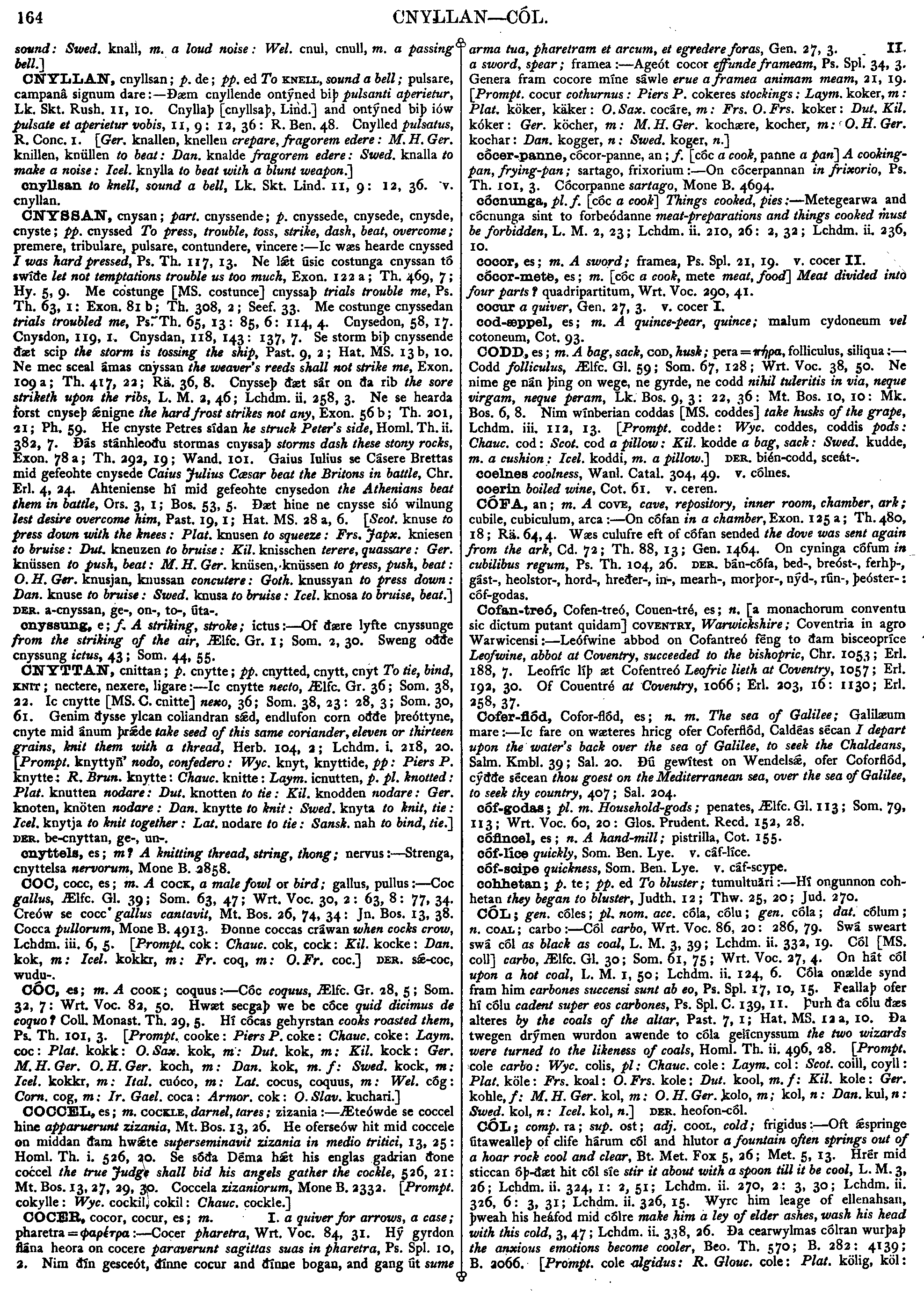
CODD, es; m. A bag, sack, COD, husk; pera = GREEK , folliculus, siliqua :-- Codd folliculus, Ælfc. Gl. 59; Som. 67, 128; Wrt. Voc. 38, 50. Ne nime ge nán þing on wege, ne gyrde, ne codd nihil tuleritis in via, neque virgam, neque peram, Lk. Bos. 9, 3: 22, 36: Mt. Bos. 10, 10: Mk. Bos. 6, 8. Nim wínberian coddas [MS. coddes] take husks of the grape, Lchdm. iii. 112, 13. [Prompt. codde: Wyc. coddes, coddis pods: Chauc. cod: Scot. cod a pillow: Kil. kodde a bag, sack: Swed. kudde, m. a cushion: Icel. koddi, m. a pillow.] DER. bién-codd, sceát-.
|
Source: Bosworth/Toller, page b0487, entry 26 View original page image as: [TIFF] [PNG] [View previous entry] [View next entry] |
[Comment on this entry] [View comments] |
The following entry has been hand-corrected once. |
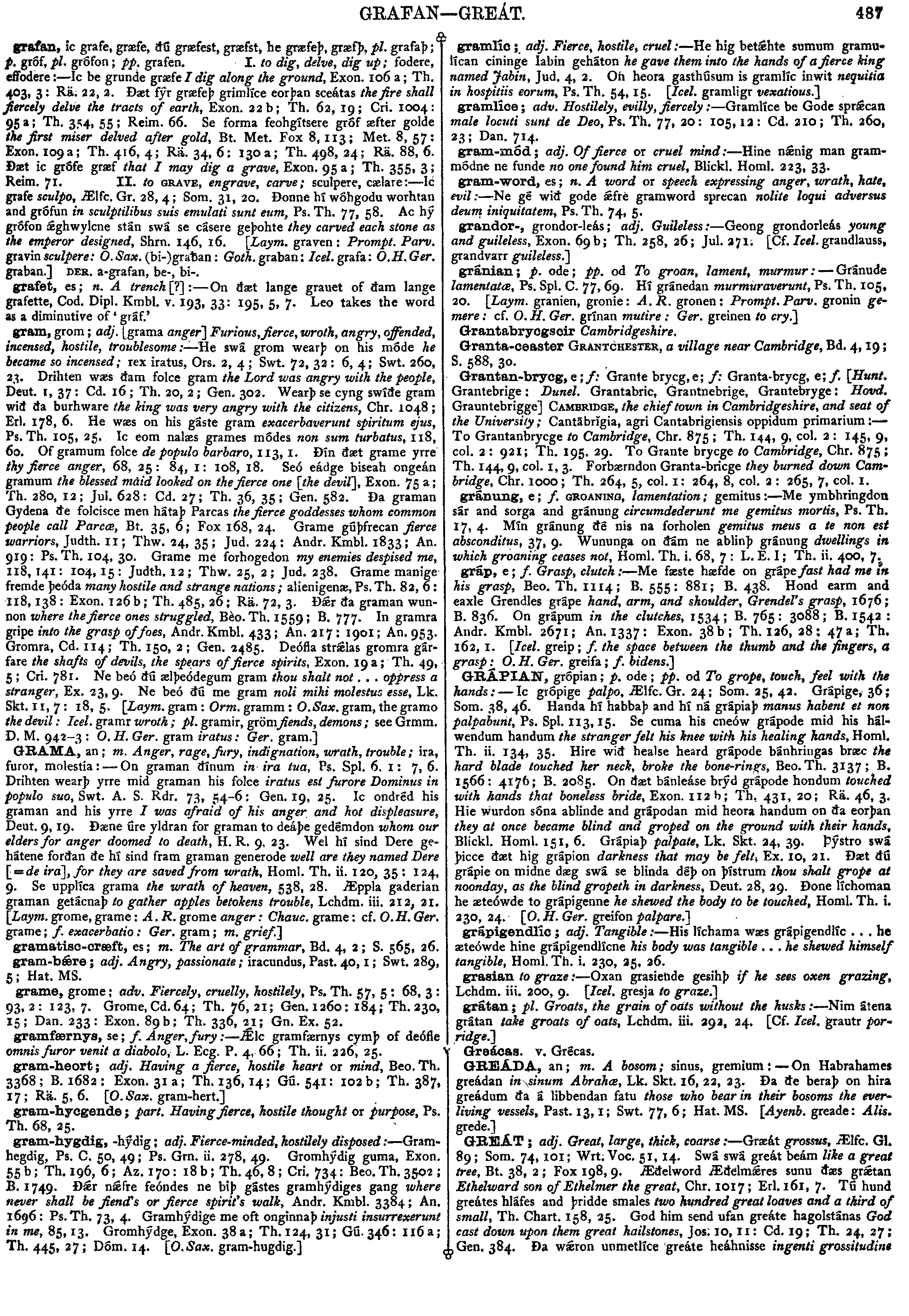
grátan; pl. Groats, the grain of oats without the husks :-- Nim átena grátan take groats of oats, Lchdm. iii. 292, 24. [Cf. Icel. grautr porridge.]
|
Source: Bosworth/Toller, page d0014, entry 8 View original page image as: [TIFF] [PNG] [View previous entry] [View next entry] |
[Comment on this entry] [View comments] |
The following entry has been hand-corrected once. |
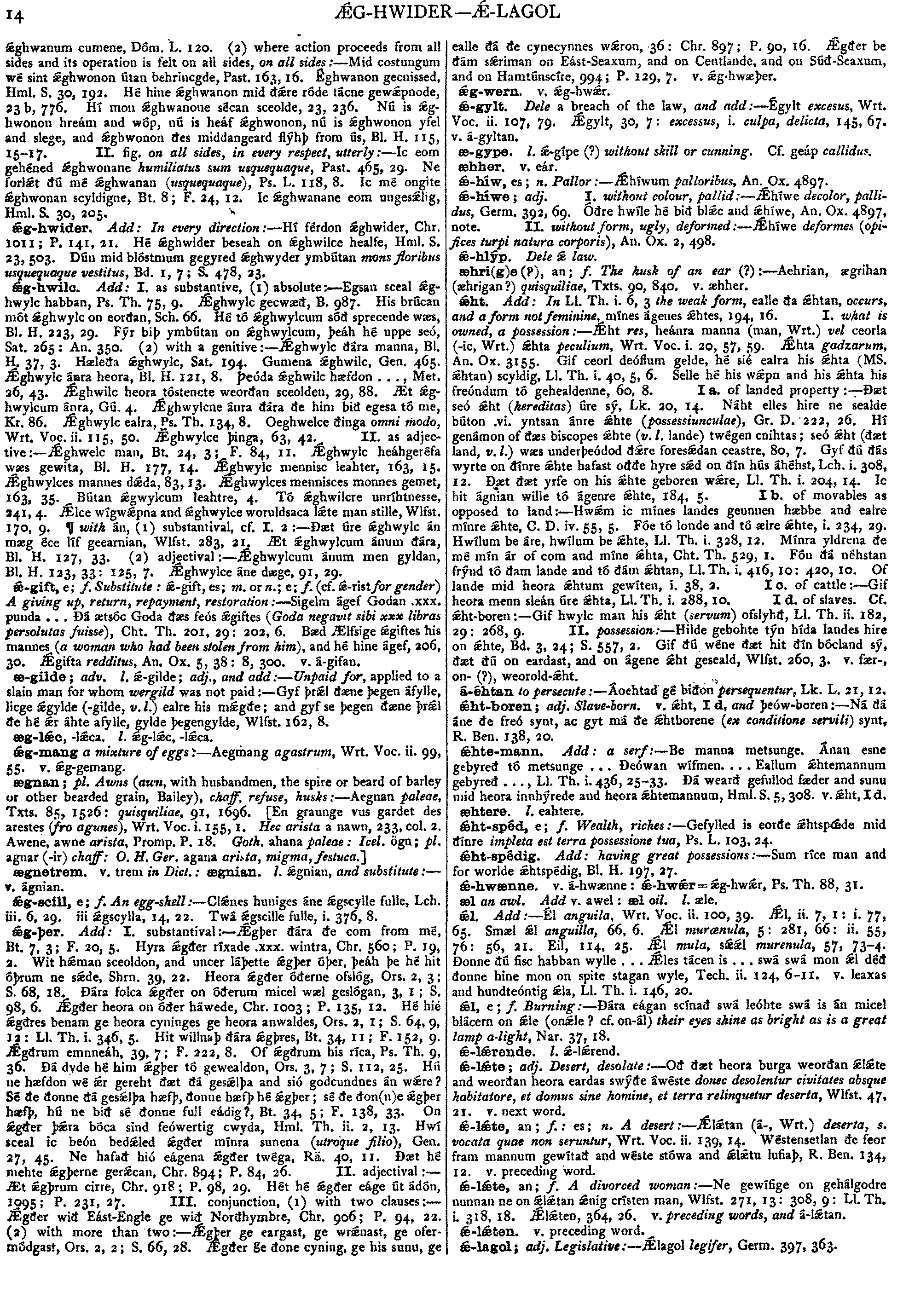
ægnan; pl. Awns (awn, with husbandmen, the spire or beard of barley or other bearded grain, Bailey), chaff, refuse, husks:--Aegnan paleae, Txts. 85, 1526: quisquiliae, 91, 1696. [En graunge vus gardet des arestes (fro agunes), Wrt. Voc. i. 155, 1. Hec arista a nawn, 233, col. 2. Awene, awne arista, Promp. P. 18. Goth. ahana paleae: Icel. ögn; pl. agnar (-ir) chaff: O. H. Ger. agana arista, migma, festuca.]
|
Source: Cleasby/Vigfusson, page b0102, entry 12 View original page image as: [TIFF] [PNG] [View previous entry] [View next entry] |
[Comment on this entry] [View comments] |
The following entry has not been hand-corrected. However, the page is reserved and someone is correcting it. |
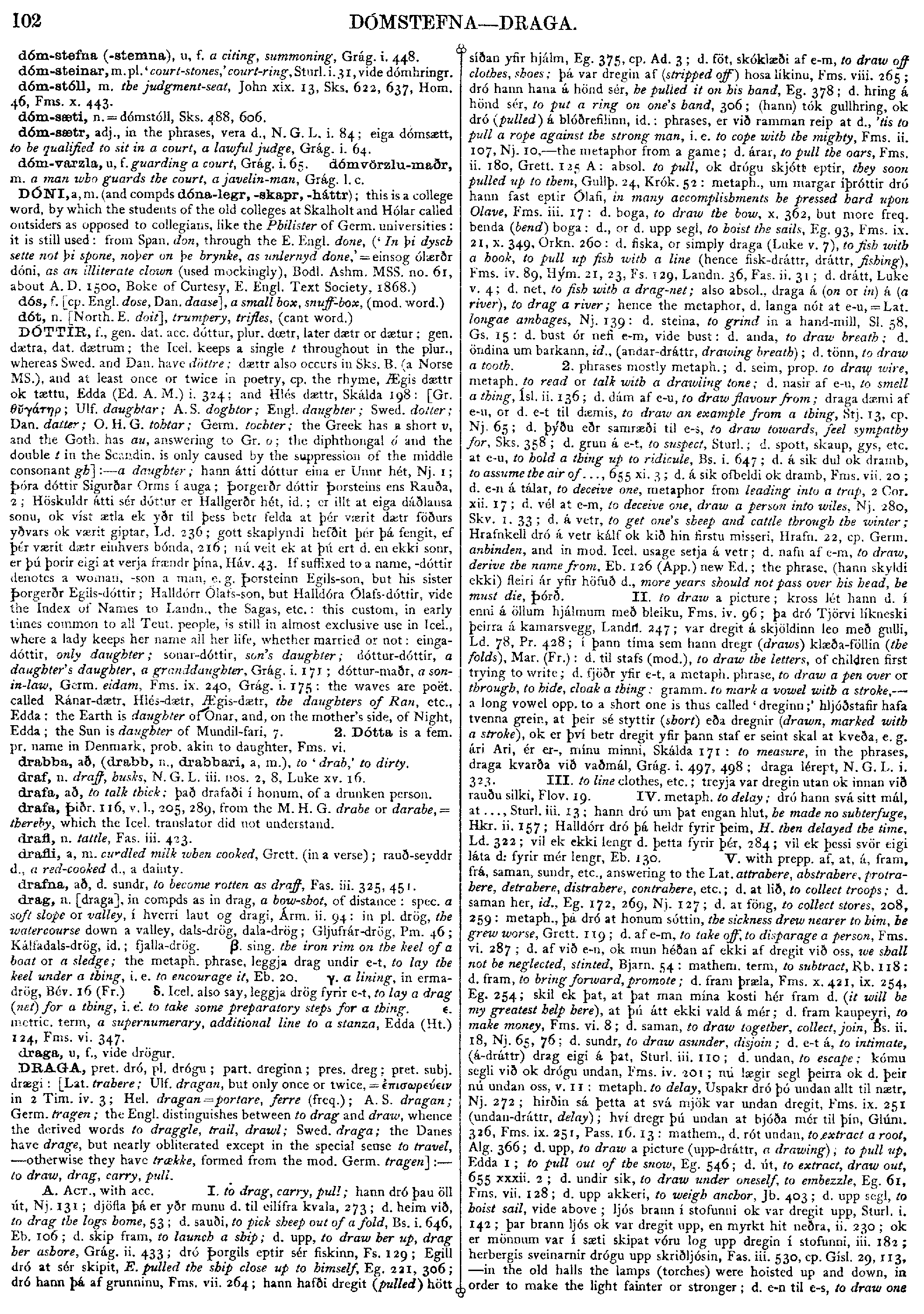
draf, n. draff, husks, N. G. L. iii. nos. 2, 8, Luke xv. 16.
|
Source: Cleasby/Vigfusson, page b0184, entry 7 View original page image as: [TIFF] [PNG] [View previous entry] [View next entry] |
[Comment on this entry] [View comments] |
The following entry has been hand-corrected once. |
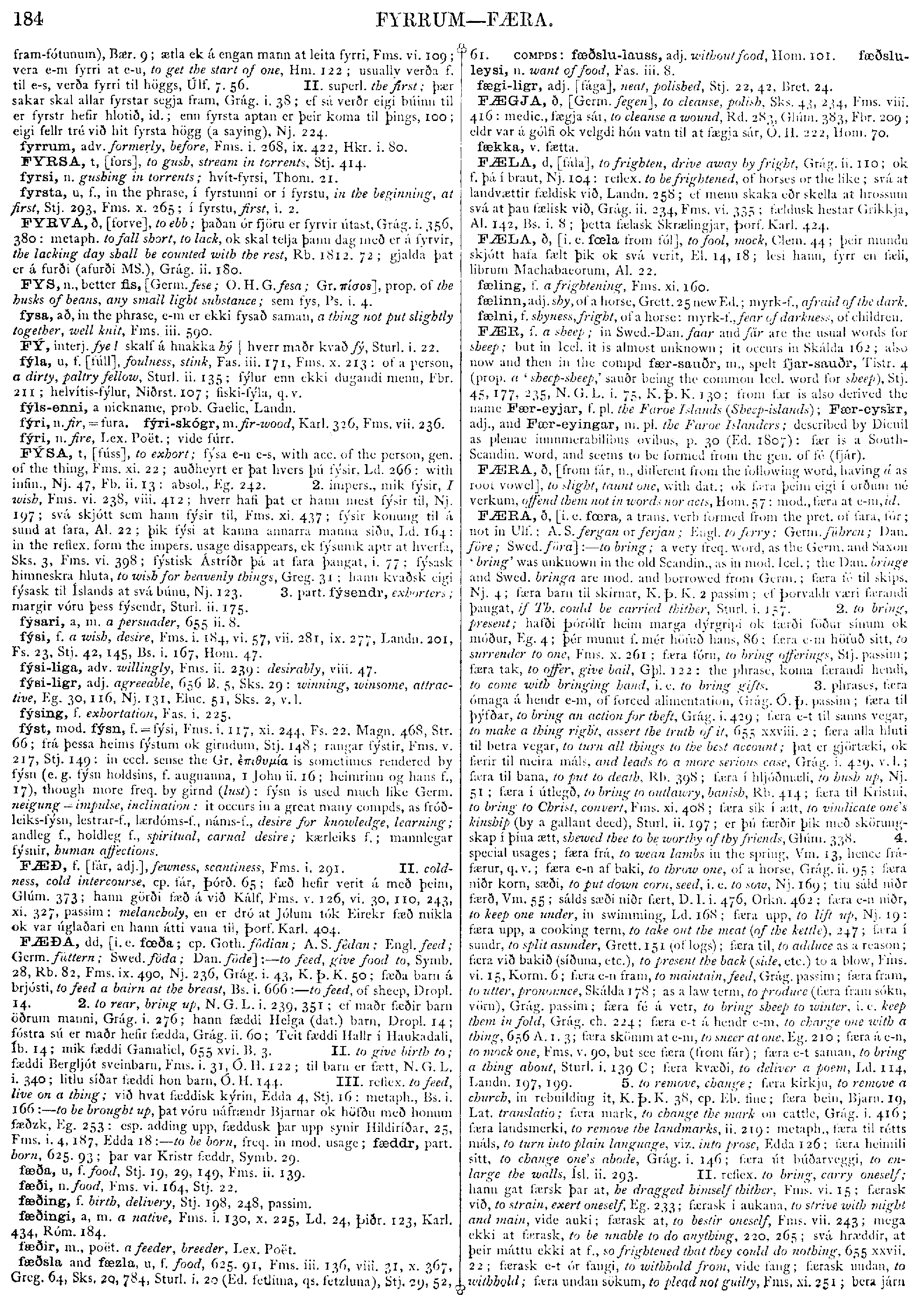
FYS, n., better fis, [Germ. fese; O. H. G. fesa; Gr. GREEK], prop. of the husks of beans, any small light substance; sem fys, Ps. i. 4.
|
Source: Cleasby/Vigfusson, page b0237, entry 5 View original page image as: [TIFF] [PNG] [View previous entry] [View next entry] |
[Comment on this entry] [View comments] |
The following entry has been hand-corrected once. |
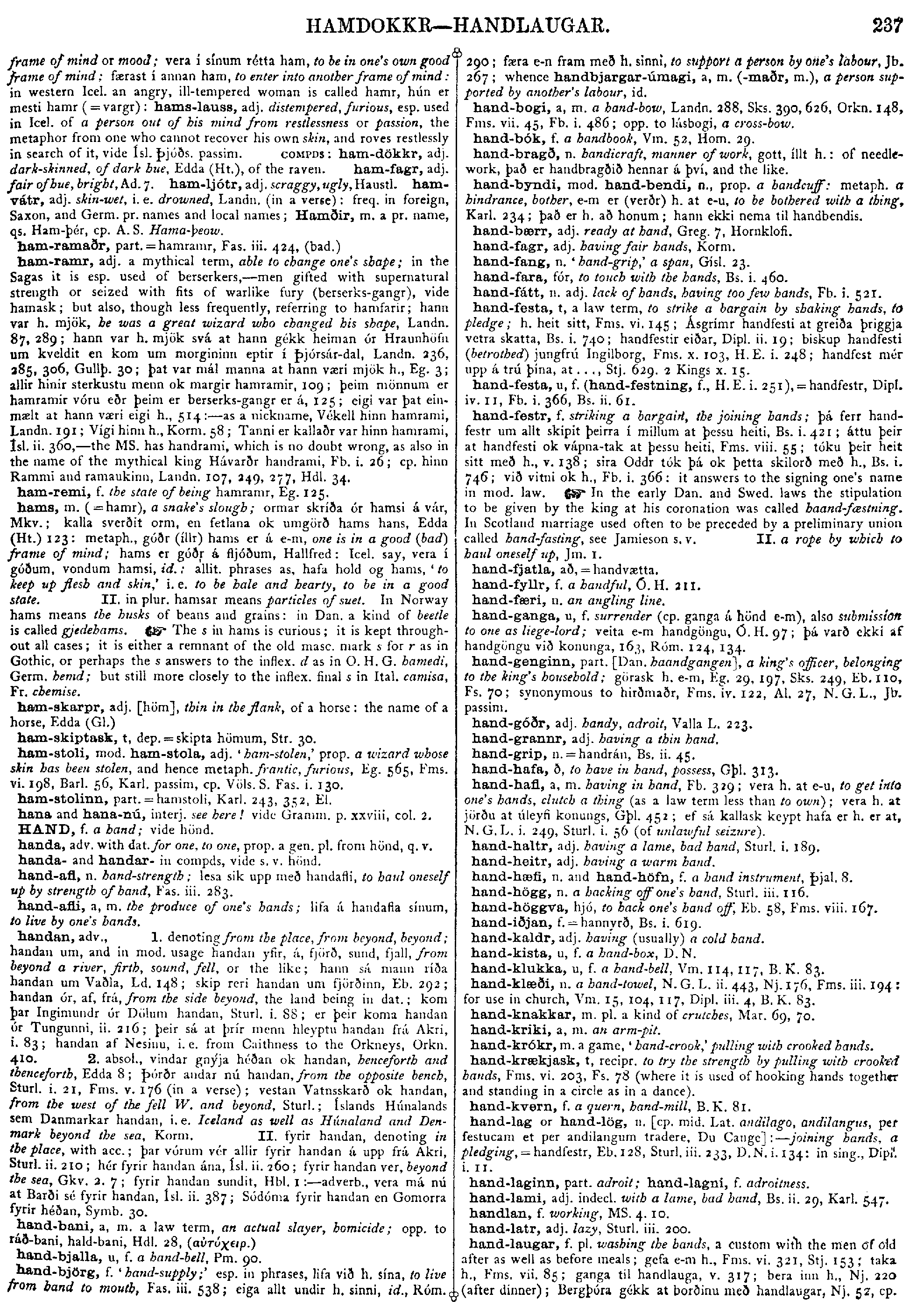
hams, m. ( = hamr), a snake's slough; ormar skríða ór hamsi á vár, Mkv.; kalla sverðit orm, en fetlana ok umgörð hams hans, Edda (Ht.) 123: metaph., góðr (íllr) hams er á e-m, one is in a good (bad) frame of mind; hams er góðr á fljóðum, Hallfred: Icel. say, vera í góðum, vondum hamsi, id.: allit. phrases as, hafa hold og hams, 'to keep up flesh and skin,' i.e. to be hale and hearty, to be in a good state. II. in plur. hamsar means particles of suet. In Norway hams means the husks of beans and grains: in Dan. a kind of beetle is called gjedehams. UNCERTAIN The s in hams is curious; it is kept throughout all cases; it is either a remnant of the old masc. mark s for r as in Gothic, or perhaps the s answers to the inflex. d as in O. H. G. hamedi, Germ. hemd; but still more closely to the inflex. final s in Ital. camisa, Fr. chemise.
|
Source: Cleasby/Vigfusson, page b0762, entry 34 View original page image as: [TIFF] [PNG] [View previous entry] [View next entry] |
[Comment on this entry] [View comments] |
The following entry has been hand-corrected once. |
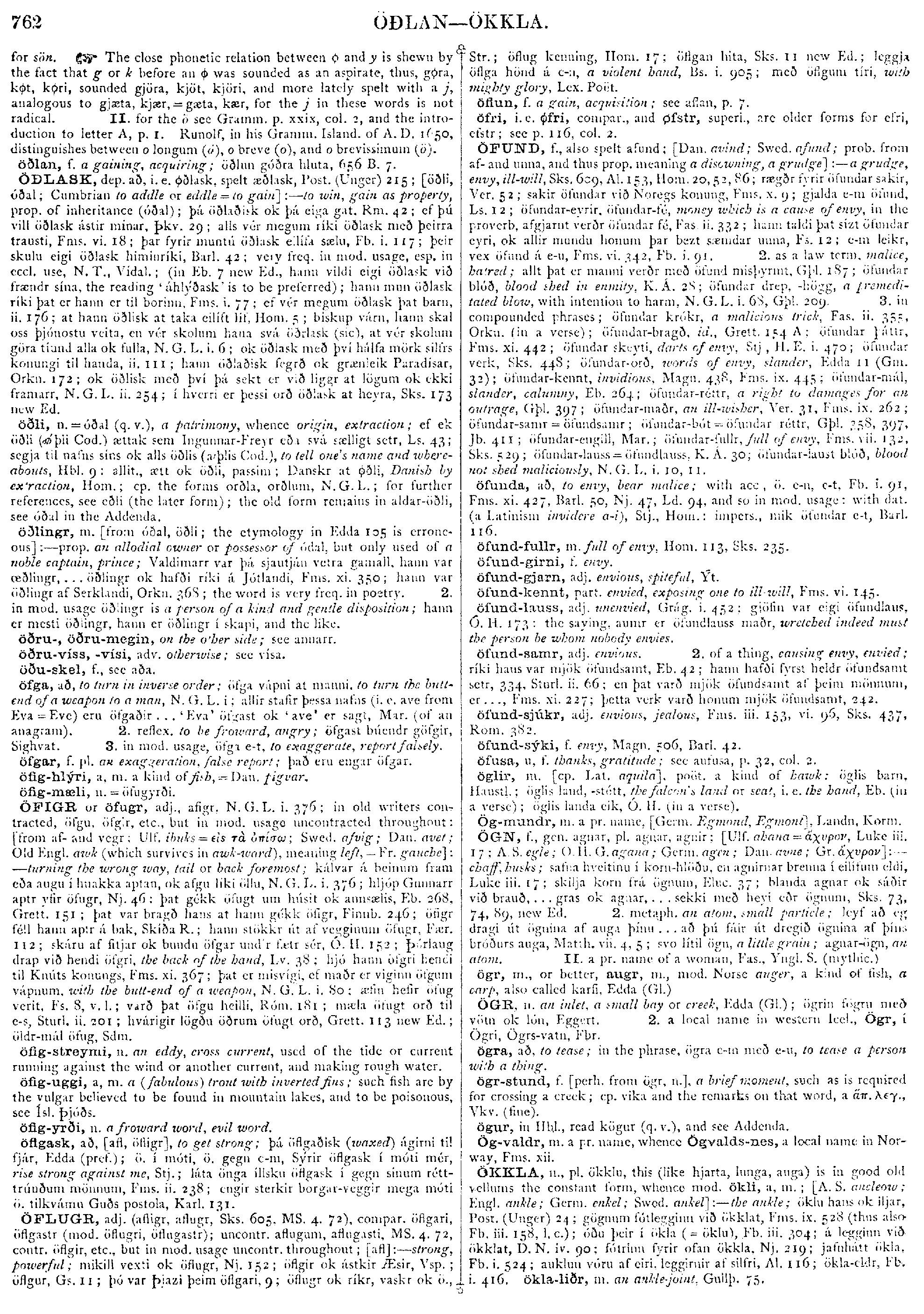
ÖGN, f., gen. agnar, pl. agnar, agnir; [Ulf. ahana = GREEK, Luke iii. 17; A.S. egle; O.H.G. agana; Germ. agen; Dan. avne; Gr. GREEK]:-- chaff, husks; safna hveitinu í korn-hlöðu, en agnirnar brenna í eilífum eldi, Luke iii. 17; skilja korn frá ögnum, Eluc. 37; blanda agnar ok sáðir við brauð, ... gras ok agnar, ... sekki með heyi eðr ögnum, Sks. 73, 74, 89, new Ed. 2. metaph. an atom, small particle; leyf að eg dragi út ögnina af auga þínu ... að þú fáir út dregið ögnina af þíns bróðurs auga, Matth. vii. 4, 5; svo lítil ögn, a little grain; agnar-ögn, an atom. II. a pr. name of a woman, Fas., Yngl. S. (mythic.)
Germanic Lexicon Project (main page)
This search system was written by
Sean Crist
Please consider
volunteering
to correct the data in these online dictionaries.
No rights reserved. Feel free to use these data in any way you please.