|
|

|
Source: Bosworth/Toller, page b0280, entry 10 View original page image as: [TIFF] [PNG] [View previous entry] [View next entry] |
[Comment on this entry] [View comments] |
The following entry has been hand-corrected once. |
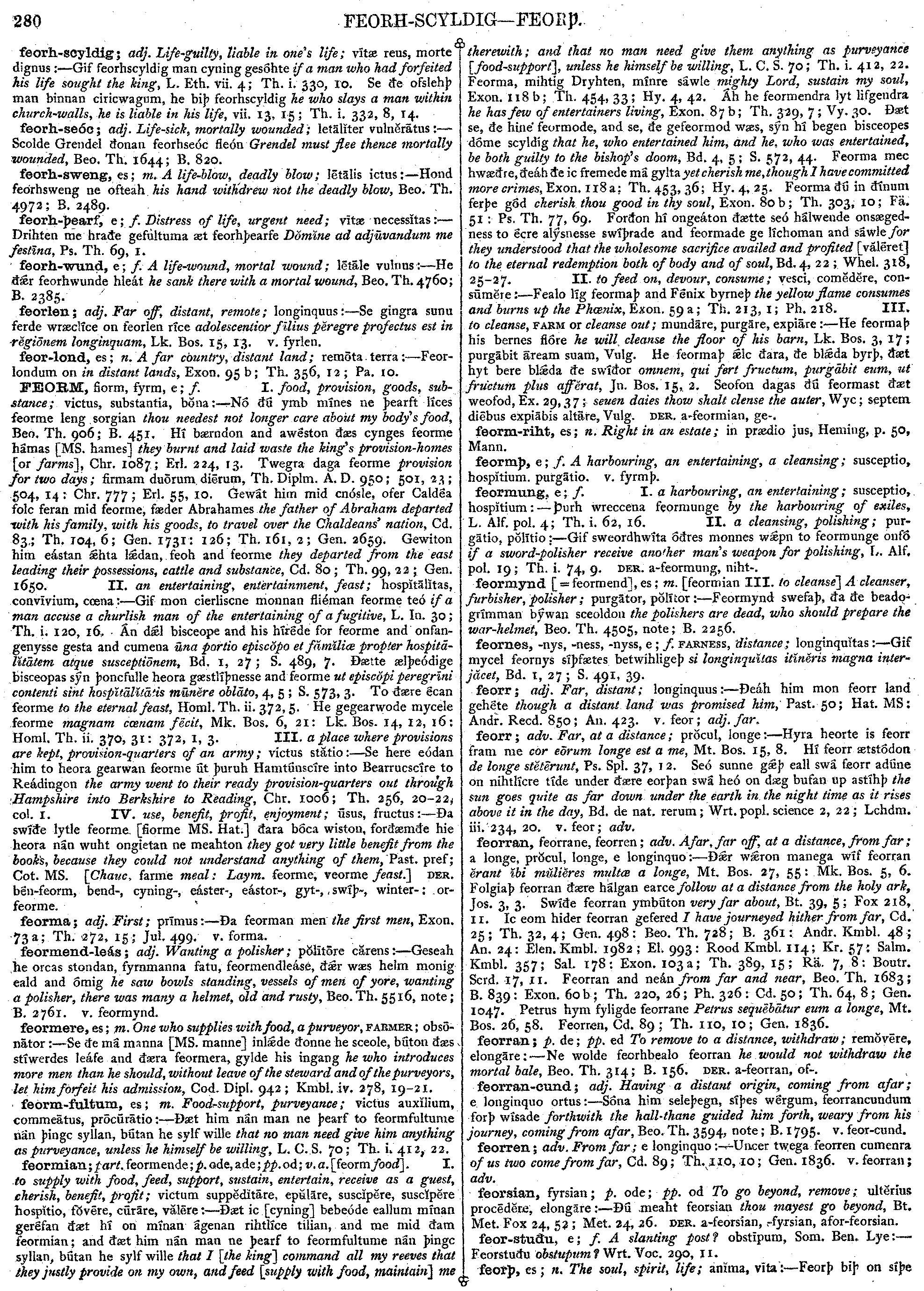
feormend-leás;
adj.
Wanting
a
polisher;
p l
l t
t re
c
re
c rens
:--
Geseah
he
orcas
stondan,
fyrnmanna
fatu,
feormendleáse,
ð
rens
:--
Geseah
he
orcas
stondan,
fyrnmanna
fatu,
feormendleáse,
ð r
wæs
helm
monig
eald
and
ómig
he
saw
bowls
standing,
vessels
of
men
of
yore,
wanting
a
polisher,
there
was
many
a
helmet,
old
and
rusty,
Beo.
Th.
5516,
note;
B.
2761.
v.
feormynd.
r
wæs
helm
monig
eald
and
ómig
he
saw
bowls
standing,
vessels
of
men
of
yore,
wanting
a
polisher,
there
was
many
a
helmet,
old
and
rusty,
Beo.
Th.
5516,
note;
B.
2761.
v.
feormynd.
|
Source: Bosworth/Toller, page b0744, entry 26 View original page image as: [TIFF] [PNG] [View previous entry] [View next entry] |
[Comment on this entry] [View comments] |
The following entry has been hand-corrected once. |
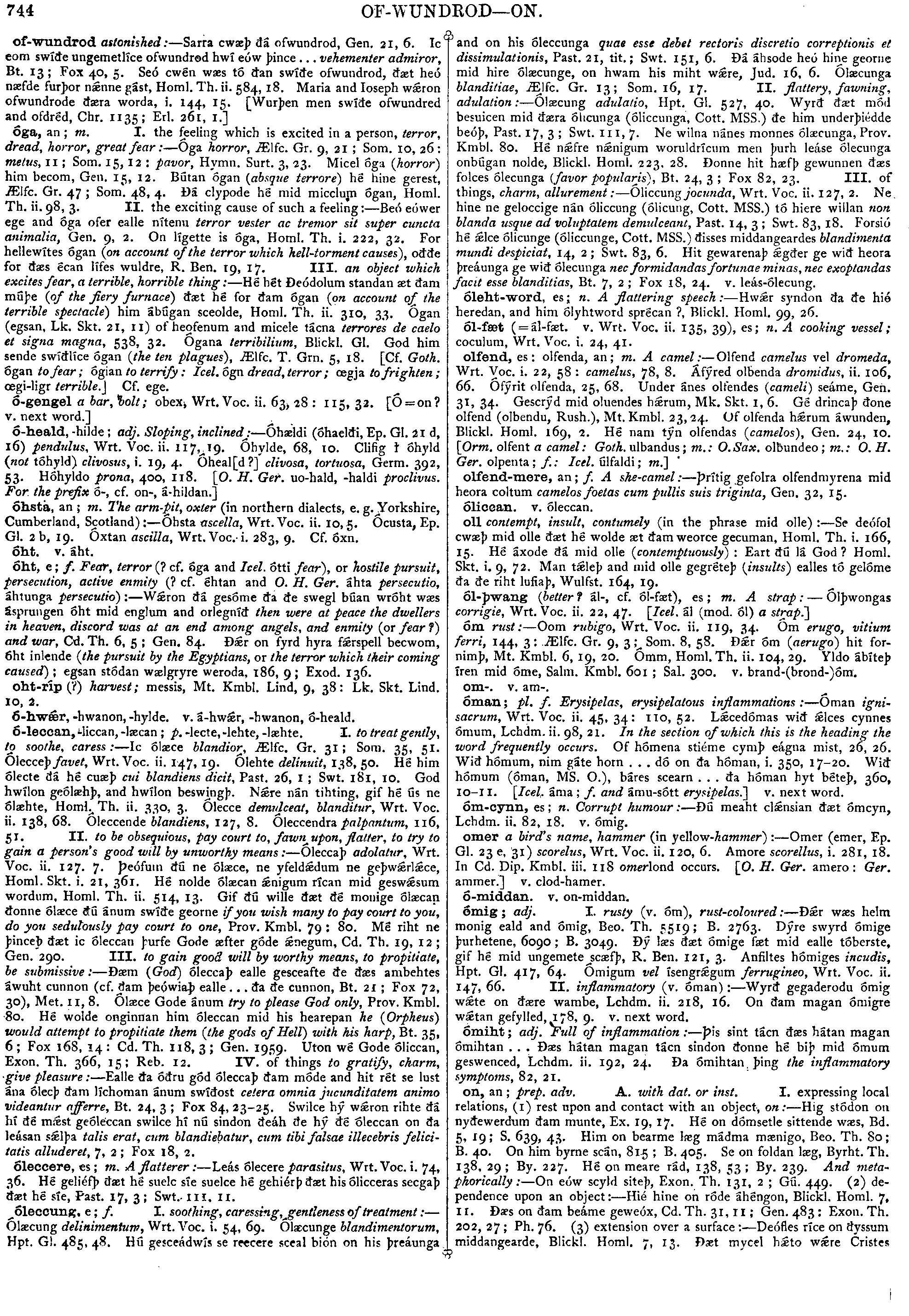
ómig
;
adj.
I.
rusty
(v.
óm),
rust-coloured
:--
Ðr
wæs
helm
monig
eald
and
ómig,
Beo.
Th.
5519;
B.
2763.
Dýre
swyrd
ómige
bmhetene,
6090;
B.
3049.
Ðý
læs
ðæt
ómige
fæt
mid
ealle
tóberste,
gif
hé
mid
ungemete
scæfþ,
R.
Ben.
121,
3.
Anfiltes
hómiges
incudis,
Hpt.
Gl.
417,
64.
Ómigum
vel
ísengrgum
ferrungineo,
Wrt.
Voc.
ii.
147,
66.
II.
inflammatory
(óman)
:--
Wyrð
gegaderodu
ómig
wte
on
ðære
wambe.
Lchdm.
ii.
218,
16.
On
ðam
magan
ómigre
wtan
gefylled,
178,
9.
v.
next
word.
|
Source: Bosworth/Toller, page b0805, entry 11 View original page image as: [TIFF] [PNG] [View previous entry] [View next entry] |
[Comment on this entry] [View comments] |
The following entry has been hand-corrected once. |
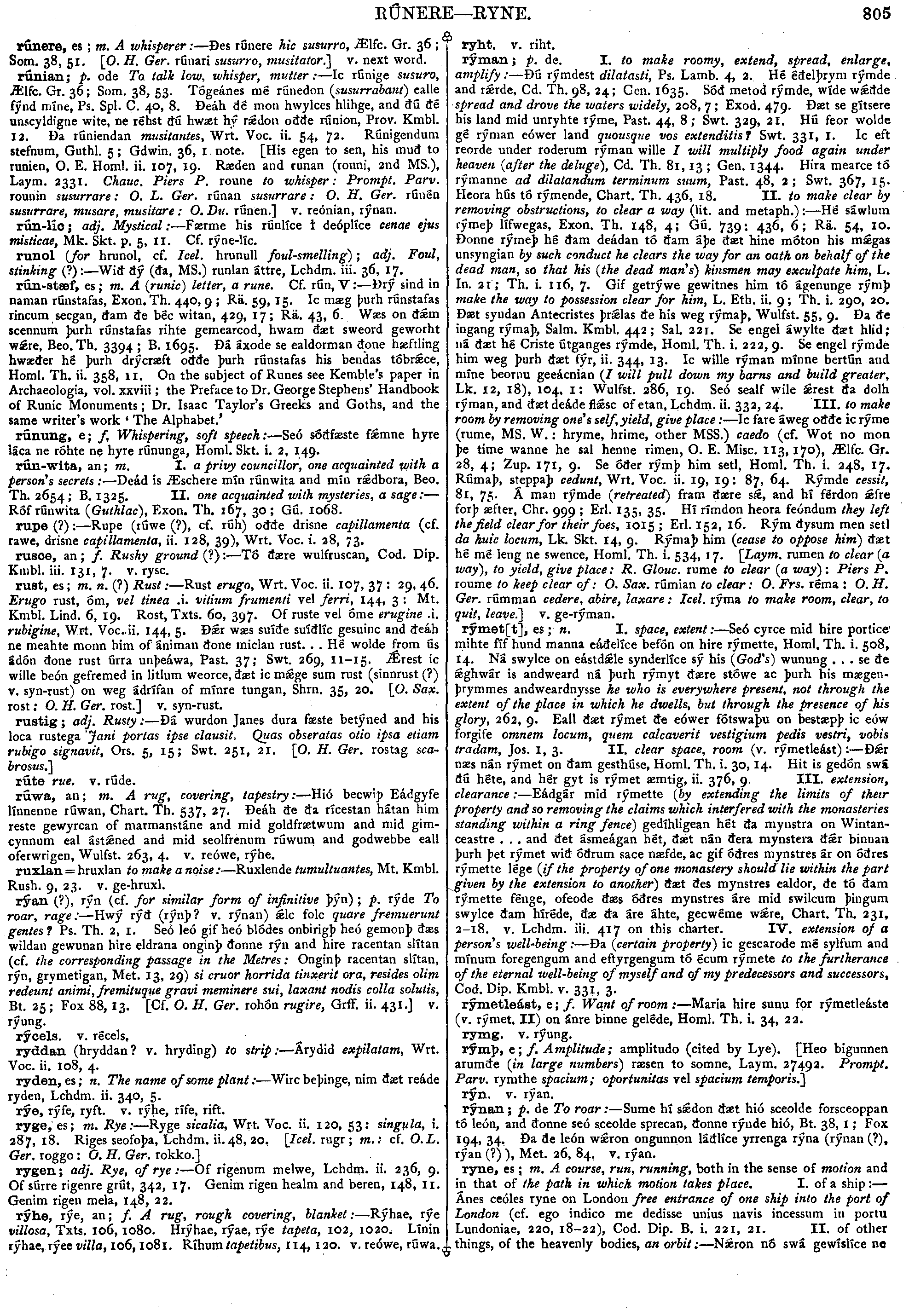
rustig; adj. Rusty :-- Ðá wurdon Janes dura fæste betýned and his loco rustega 'Jani portas ipse clausit, Quas obseratas otio ipsa etiam rubigo signavit, Ors. 5, 15; Swt. 251, 21. [O. H. Ger. rostag scabrosus.]
|
Source: Bosworth/Toller, page b0894, entry 19 View original page image as: [TIFF] [PNG] [View previous entry] [View next entry] |
[Comment on this entry] [View comments] |
The following entry has been hand-corrected once. |
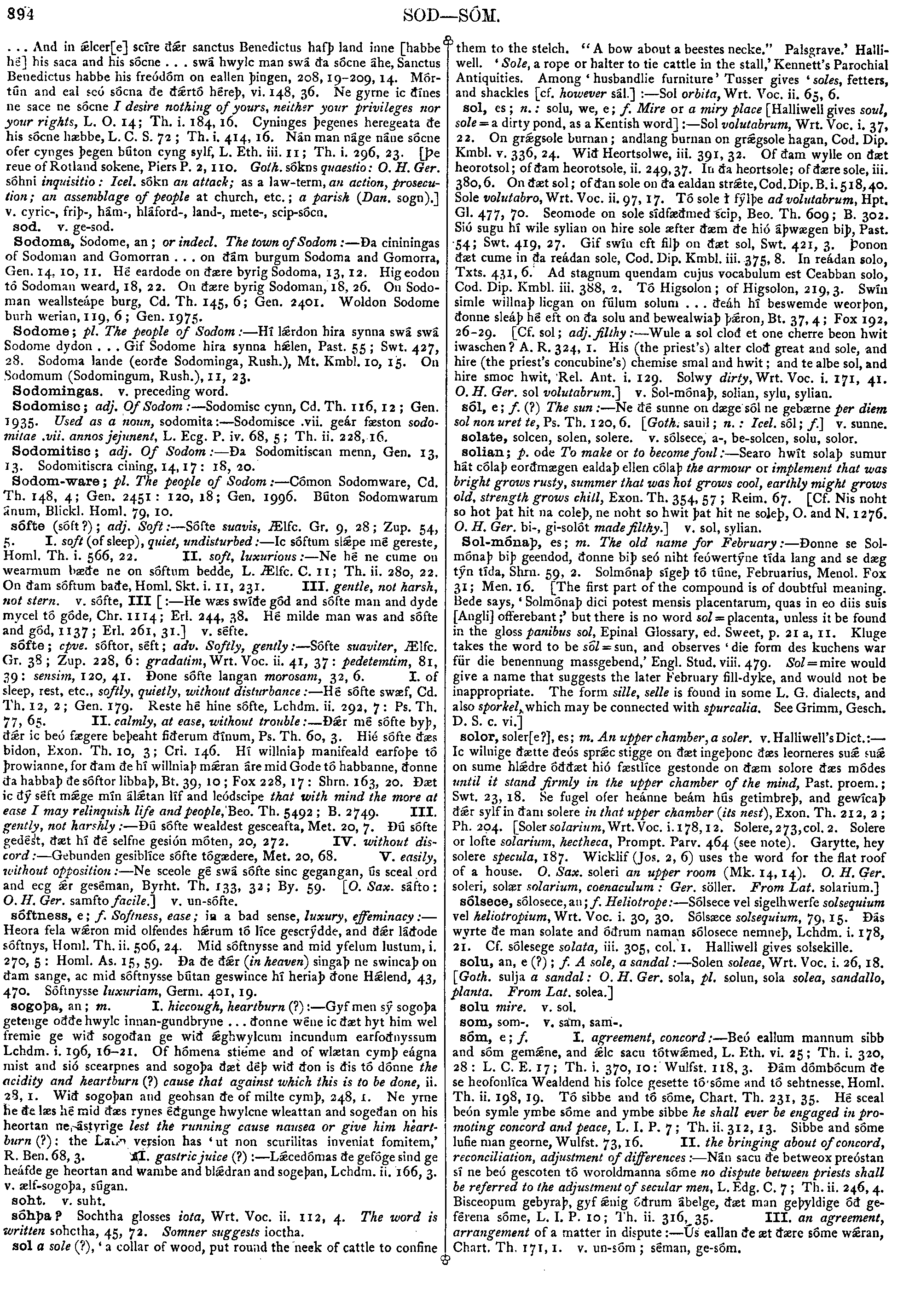
solian; p. ode To make or to become foul:--Searo hwít solaþ sumur hát cólaþ eorðmægen ealdaþ ellen cólaþ the armour or implement that was bright grows rusty, summer that was hot grows cool, earthly might grows old, strength grows chill, Exon. Th. 354, 57; Reim. 67. [Cf. Nis noht so hot þat hit na coleþ, ne noht so hwit þat hit ne soleþ, O. and N. 1276. O. H. Ger. bi-, gi-solót made filthy.] v. sol, sylian.
|
Source: Cleasby/Vigfusson, page b0152, entry 14 View original page image as: [TIFF] [PNG] [View previous entry] [View next entry] |
[Comment on this entry] [View comments] |
The following entry has been hand-corrected once. |
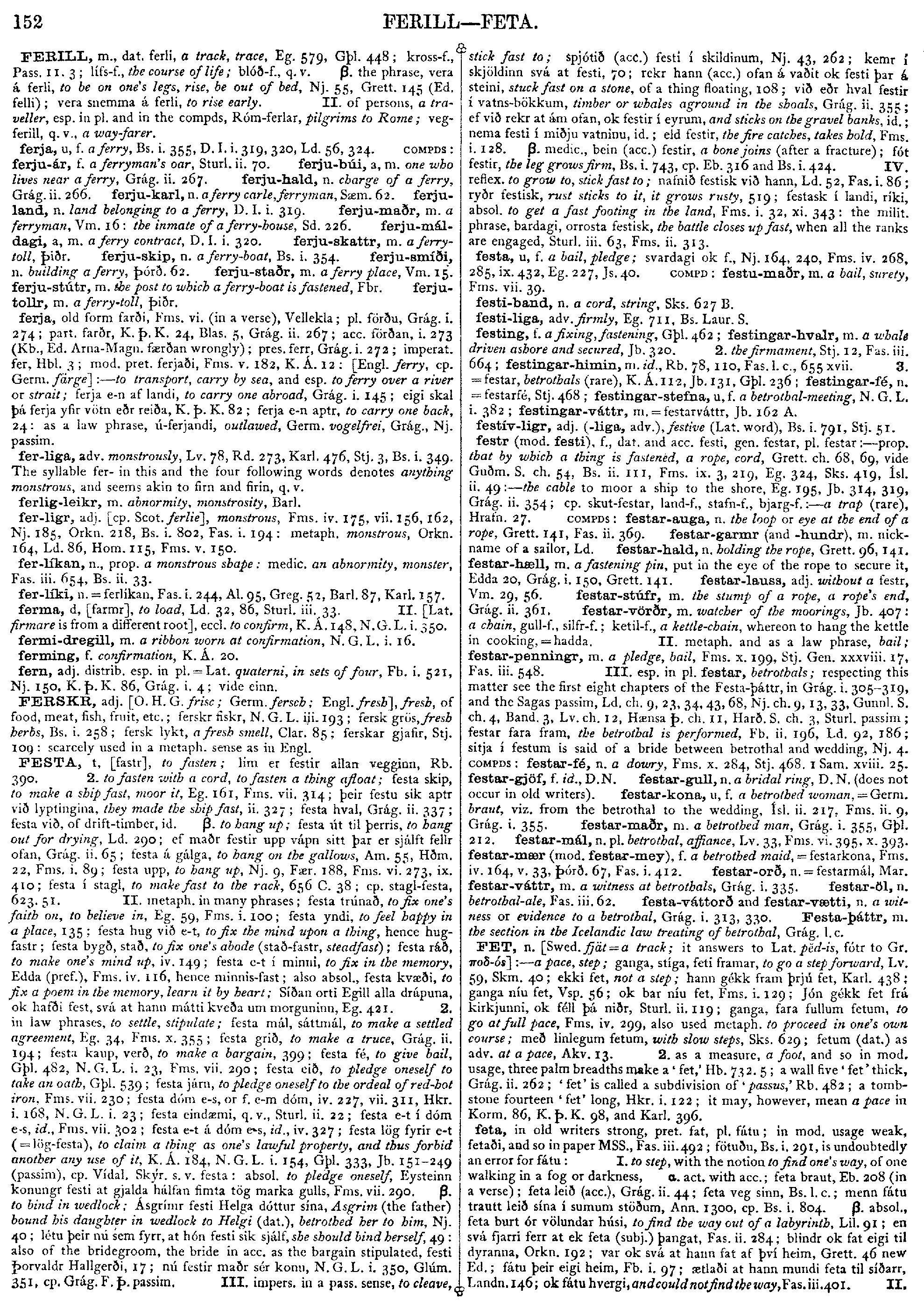
FESTA,
t,
[fastr],
to
fasten;
lím
er
festir
allart
vegginn,
Rb.
390.
2.
to
fasten
with
a
cord,
to
fasten
a
thing
afloat;
festa
skip,
to
make
a
ship
fast,
moor
it,
Eg.
161,
Fms.
vii.
314;
þeir
festu
sik
aptr
við
lyptingina,
they
made
the
ship
fast,
ii.
327;
festa
hval,
Grág.
ii.
337;
festa
við,
of
drift-timber,
id.
 .
to
hang
up;
festa
út
til
þerris,
to
hang
out
for
drying,
Ld.
290;
ef
maðr
festir
upp
vápn
sitt
þar
er
sjálft
fellr
ofan,
Grág.
ii.
65;
festa
á
gálga,
to
hang
on
the
gallows,
Am.
55,
Hðm.
22,
Fms.
i.
89;
festa
upp,
to
hang
up,
Nj.
9,
Fær.
188,
Fms.
vi.
273,
ix.
410;
festa
í
stagl,
to
make
fast
to
the
rack,
656
C.
38;
cp.
stagl-festa,
623.
51.
II.
metaph.
in
many
phrases;
festa
trúnað,
to
fix
one's
faith
on,
to
believe
in,
Eg.
59,
Fms.
i.
100;
festa
yndi,
to
feel
happy
in
a
place,
135;
festa
hug
við
e-t,
to
fix
the
mind
upon
a
thing,
hence
hug-fastr;
festa
bygð,
stað,
to
fix
one's
abode
(stað-fastr,
steadfast);
festa
ráð,
to
make
one's
mind
up,
iv.
149;
festa
e-t
í
minni,
to
fix
in
the
memory,
Edda
(pref.),
Fms.
iv.
116,
hence
minnis-fast;
also
absol.,
festa
kvæði,
to
fix
a
poem
in
the
memory,
learn
it
by
heart;
Síðan
orti
Egill
alla
drápuna,
ok
hafði
fest,
svá
at
hann
mátti
kveða
um
morguninn,
Eg.
421.
2.
in
law
phrases,
to
settle,
stipulate;
festa
mál,
sáttmál,
to
make
a
settled
agreement,
Eg.
34,
Fms.
x.
355;
festa
grið,
to
make
a
truce,
Grág.
ii.
194;
festa
kaup,
verð,
to
wake
a
bargain,
399;
festa
fé,
to
give
bail,
Gþl.
482,
N.
G.
L.
i.
23,
Fms.
vii.
290;
festa
eið,
to
pledge
oneself
to
take
an
oath,
Gþl.
539;
festa
járn,
to
pledge
oneself
to
the
ordeal
of
red-hot
iron,
Fms.
vii.
230;
festa
dóm
e-s,
or
f.
e-m
dóm,
iv.
227,
vii.
311,
Hkr.
i.
168,
N.
G.
L.
i.
23;
festa
eindæmi,
q.v.,
Sturl.
ii.
22;
festa
e-t
í
dóm
e-s,
id.,
Fms.
vii.
302;
festa
e-t
á
dóm
e-s,
id.,
iv.
327;
festa
lög
fyrir
e-t
(=
lög-festa),
to
claim
a
thing
as
one's
lawful
property,
and
thus
forbid
another
any
use
of
it,
K.
Á.
184,
N.
G.
L.
i.
154,
Gþl.
333,
Jb.
151-249
(passim),
cp.
Vídal.
Skýr.
s.v.
festa:
absol.
to
pledge
oneself,
Eysteinn
konungr
festi
at
gjalda
hálfan
fimta
tög
marka
gulls,
Fms.
vii.
290.
.
to
bind
in
wedlock;
Ásgrímr
festi
Helga
dóttur
sína,
Asgrim
(the
father)
bound
his
daughter
in
wedlock
to
Helgi
(dat.),
betrothed
her
to
him,
Nj.
40;
létu
þeir
nú
sem
fyrr,
at
hón
festi
sik
sjálf,
she
should
bind
herself,
49:
also
of
the
bridegroom,
the
bride
in
acc.
as
the
bargain
stipulated,
festi
Þorvaldr
Hallgerði,
17;
nú
festir
maðr
sér
konu,
N.
G.
L.
i.
350,
Glúm.
351,
cp,
Grág.
F.
Þ.
passim.
III.
impers.
in
a
pass.
sense,
to
cleave,
stick
fast
to;
spjótið
(acc.)
festi
í
skildinum,
Nj.
43,
262;
kemr
í
skjöldinn
svá
at
festi,
70;
rekr
hann
(acc.)
ofan
á
vaðit
ok
festi
þar
á
steini,
stuck
fast
on
a
stone,
of
a
thing
floating,
108;
við
eðr
hval
festir
í
vatns-bökkum,
timber
or
whales
aground
in
the
shoals,
Grág.
ii.
355;
ef
við
rekr
at
ám
ofan,
ok
festir
í
eyrum,
and
sticks
on
the
gravel
banks,
id.;
nema
festi
í
miðju
vatninu,
id.;
eld
festir,
the
fire
catches,
takes
hold,
Fms.
i.
128.
.
medic.,
bein
(acc.)
festir,
a
bone
joins
(after
a
fracture);
fót
festir,
the
leg
grows
firm,
Bs.
i.
743,
cp.
Eb.
316
and
Bs.
5.
424.
IV.
reflex.
to
grow
to,
stick
fast
to;
nafnið
festisk
við
hann,
Ld.
52,
Fas.
i.
86;
ryðr
festisk,
rust
sticks
to
it,
it
grows
rusty,
519;
festask
í
landi,
ríki,
absol.
to
get
a
fast
footing
in
the
land,
Fms.
i.
32,
xi.
343:
the
milit.
phrase,
bardagi,
orrosta
festisk,
the
battle
closes
up
fast,
when
all
the
ranks
are
engaged,
Sturl.
iii.
63,
Fms.
ii.
313.
.
to
hang
up;
festa
út
til
þerris,
to
hang
out
for
drying,
Ld.
290;
ef
maðr
festir
upp
vápn
sitt
þar
er
sjálft
fellr
ofan,
Grág.
ii.
65;
festa
á
gálga,
to
hang
on
the
gallows,
Am.
55,
Hðm.
22,
Fms.
i.
89;
festa
upp,
to
hang
up,
Nj.
9,
Fær.
188,
Fms.
vi.
273,
ix.
410;
festa
í
stagl,
to
make
fast
to
the
rack,
656
C.
38;
cp.
stagl-festa,
623.
51.
II.
metaph.
in
many
phrases;
festa
trúnað,
to
fix
one's
faith
on,
to
believe
in,
Eg.
59,
Fms.
i.
100;
festa
yndi,
to
feel
happy
in
a
place,
135;
festa
hug
við
e-t,
to
fix
the
mind
upon
a
thing,
hence
hug-fastr;
festa
bygð,
stað,
to
fix
one's
abode
(stað-fastr,
steadfast);
festa
ráð,
to
make
one's
mind
up,
iv.
149;
festa
e-t
í
minni,
to
fix
in
the
memory,
Edda
(pref.),
Fms.
iv.
116,
hence
minnis-fast;
also
absol.,
festa
kvæði,
to
fix
a
poem
in
the
memory,
learn
it
by
heart;
Síðan
orti
Egill
alla
drápuna,
ok
hafði
fest,
svá
at
hann
mátti
kveða
um
morguninn,
Eg.
421.
2.
in
law
phrases,
to
settle,
stipulate;
festa
mál,
sáttmál,
to
make
a
settled
agreement,
Eg.
34,
Fms.
x.
355;
festa
grið,
to
make
a
truce,
Grág.
ii.
194;
festa
kaup,
verð,
to
wake
a
bargain,
399;
festa
fé,
to
give
bail,
Gþl.
482,
N.
G.
L.
i.
23,
Fms.
vii.
290;
festa
eið,
to
pledge
oneself
to
take
an
oath,
Gþl.
539;
festa
járn,
to
pledge
oneself
to
the
ordeal
of
red-hot
iron,
Fms.
vii.
230;
festa
dóm
e-s,
or
f.
e-m
dóm,
iv.
227,
vii.
311,
Hkr.
i.
168,
N.
G.
L.
i.
23;
festa
eindæmi,
q.v.,
Sturl.
ii.
22;
festa
e-t
í
dóm
e-s,
id.,
Fms.
vii.
302;
festa
e-t
á
dóm
e-s,
id.,
iv.
327;
festa
lög
fyrir
e-t
(=
lög-festa),
to
claim
a
thing
as
one's
lawful
property,
and
thus
forbid
another
any
use
of
it,
K.
Á.
184,
N.
G.
L.
i.
154,
Gþl.
333,
Jb.
151-249
(passim),
cp.
Vídal.
Skýr.
s.v.
festa:
absol.
to
pledge
oneself,
Eysteinn
konungr
festi
at
gjalda
hálfan
fimta
tög
marka
gulls,
Fms.
vii.
290.
.
to
bind
in
wedlock;
Ásgrímr
festi
Helga
dóttur
sína,
Asgrim
(the
father)
bound
his
daughter
in
wedlock
to
Helgi
(dat.),
betrothed
her
to
him,
Nj.
40;
létu
þeir
nú
sem
fyrr,
at
hón
festi
sik
sjálf,
she
should
bind
herself,
49:
also
of
the
bridegroom,
the
bride
in
acc.
as
the
bargain
stipulated,
festi
Þorvaldr
Hallgerði,
17;
nú
festir
maðr
sér
konu,
N.
G.
L.
i.
350,
Glúm.
351,
cp,
Grág.
F.
Þ.
passim.
III.
impers.
in
a
pass.
sense,
to
cleave,
stick
fast
to;
spjótið
(acc.)
festi
í
skildinum,
Nj.
43,
262;
kemr
í
skjöldinn
svá
at
festi,
70;
rekr
hann
(acc.)
ofan
á
vaðit
ok
festi
þar
á
steini,
stuck
fast
on
a
stone,
of
a
thing
floating,
108;
við
eðr
hval
festir
í
vatns-bökkum,
timber
or
whales
aground
in
the
shoals,
Grág.
ii.
355;
ef
við
rekr
at
ám
ofan,
ok
festir
í
eyrum,
and
sticks
on
the
gravel
banks,
id.;
nema
festi
í
miðju
vatninu,
id.;
eld
festir,
the
fire
catches,
takes
hold,
Fms.
i.
128.
.
medic.,
bein
(acc.)
festir,
a
bone
joins
(after
a
fracture);
fót
festir,
the
leg
grows
firm,
Bs.
i.
743,
cp.
Eb.
316
and
Bs.
5.
424.
IV.
reflex.
to
grow
to,
stick
fast
to;
nafnið
festisk
við
hann,
Ld.
52,
Fas.
i.
86;
ryðr
festisk,
rust
sticks
to
it,
it
grows
rusty,
519;
festask
í
landi,
ríki,
absol.
to
get
a
fast
footing
in
the
land,
Fms.
i.
32,
xi.
343:
the
milit.
phrase,
bardagi,
orrosta
festisk,
the
battle
closes
up
fast,
when
all
the
ranks
are
engaged,
Sturl.
iii.
63,
Fms.
ii.
313.
|
Source: Cleasby/Vigfusson, page b0504, entry 23 View original page image as: [TIFF] [PNG] [View previous entry] [View next entry] |
[Comment on this entry] [View comments] |
The following entry has been hand-corrected once. |
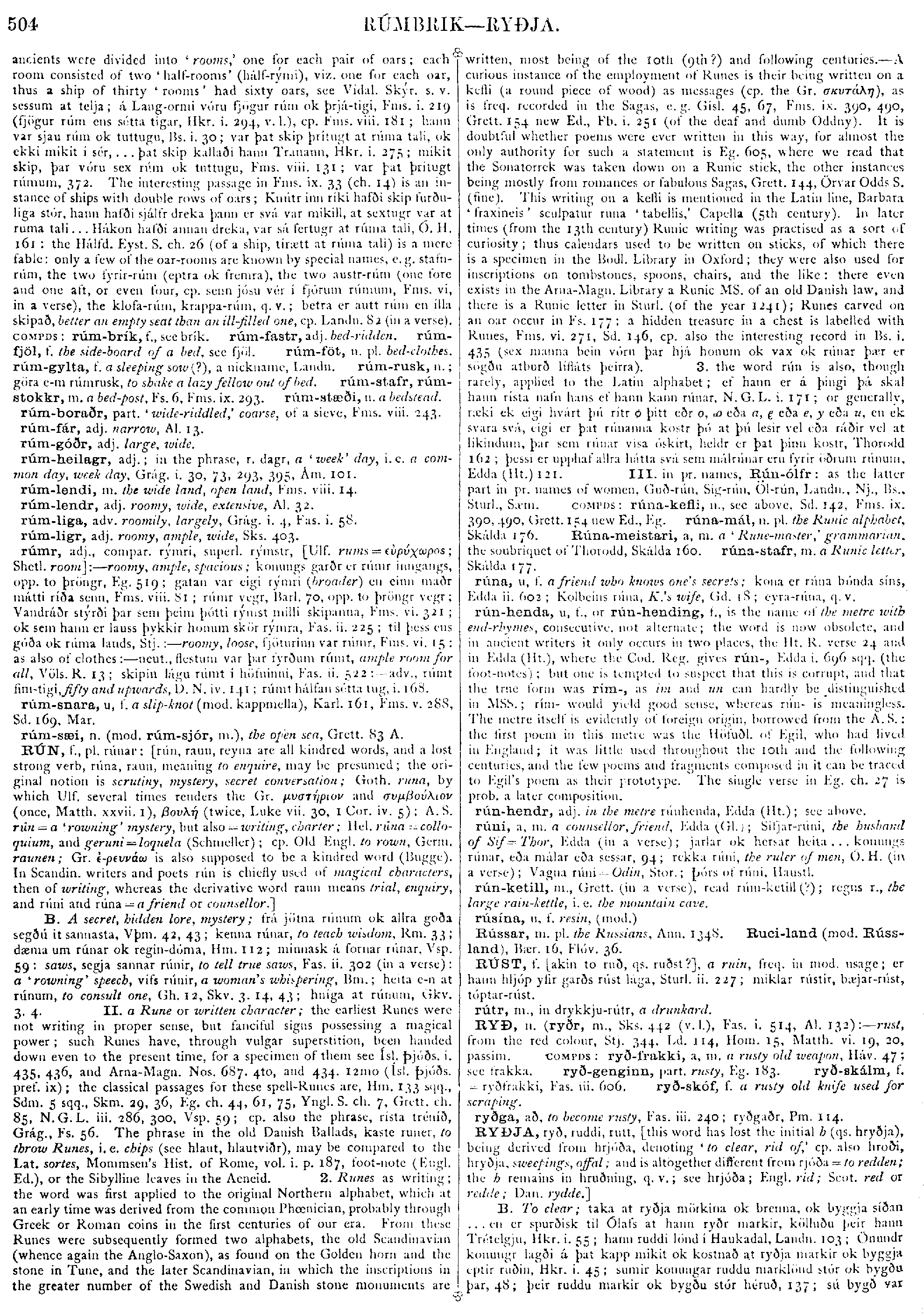
RYÐ, n. (ryðr, m., Sks. 442 (v.l.), Fas. i. 514, Al. 132) :-- rust,from the red colour, Stj. 344, Ld. 114, Hom. 15, Matth. vi. 19, 20, passim. COMPDS: ryð-frakki, a, m. a rusty old weapon., Háv. 47; see frakka. ryð-genginn, part. rusty, Eg. 183. ryð-skálm, f. = ryðfrakki, Fas. iii. 606. ryð-skóf, f. a rusty old knife used for scraping.
|
Source: Cleasby/Vigfusson, page b0504, entry 24 View original page image as: [TIFF] [PNG] [View previous entry] [View next entry] |
[Comment on this entry] [View comments] |
The following entry has been hand-corrected once. |
ryðga, að, to become rusty, Fas. iii. 240; ryðgaðr, Pm. 114.
Germanic Lexicon Project (main page)
This search system was written by
Sean Crist
Please consider
volunteering
to correct the data in these online dictionaries.
No rights reserved. Feel free to use these data in any way you please.